Why Pottery is the new Meditation
(And why Aavya is the perfect place for it)
Let’s be honest. Sitting cross-legged with your eyes closed, trying to clear your mind, can sometimes feel like wrestling a monkey on Red Bull. The harder you try not to think, the louder your thoughts get.
That’s where pottery comes in.
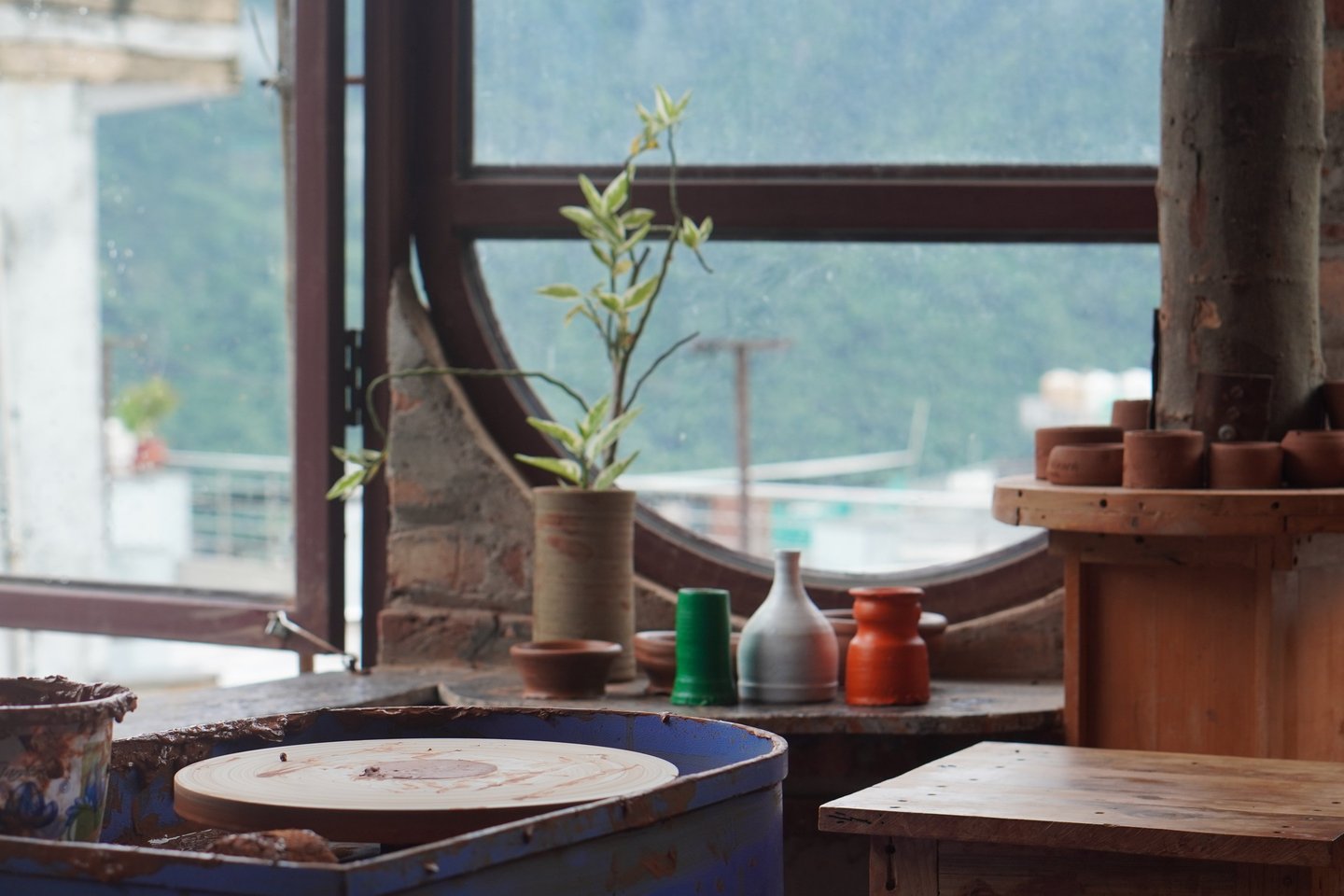
At Aavya Pottery & Arts Studio in Tapovan, Rishikesh, we see this every day: meditation doesn’t always have to look like meditation. Sometimes it looks like mud under your fingernails, clay on your clothes, and a pottery wheel spinning you gently into stillness.
Mindfulness Through Clay in Rishikesh
Clay Forces You Into The Present Moment
Clay is honest. Almost aggressively so.If you’re distracted, it collapses.If you’re tense, it wobbles.
If you try to control it too much, it gives up dramatically the diva of the art world. But clay doesn’t judge you. It simply asks for attention.So you slow down. You breathe. You adjust your hands. You try again.
That loop notice, pause, respond is mindfulness in its most natural form.
This is why pottery is increasingly recognised as a form of active meditation. Your hands do the work, and your mind quietly follows.
About Us
The Pottery Wheel: Accidental Meditation Tool
There’s something deeply calming about the wheel.
It hums.It spins. It keeps a steady rhythm like a very chill DJ who doesn’t care about your productivity.
As your hands centre the clay, your thoughts centre too. Phones disappear. Time softens. You enter what psychologists call flow and what most of us just call feeling okay again.
People searching for pottery classes in Rishikesh often come for creativity. They stay for presence. And they leave with something tangible even if it’s a slightly lopsided cup that somehow feels perfect.
Pottery in Rishikesh: Beyond Toga & Silence
Rishikesh is famous for yoga, meditation, and spiritual discipline. And all of that has its place.
But not everyone finds stillness by sitting still.
For many, especially travelers and first-timers, creative activities in Rishikesh like pottery and art workshops offer a more accessible way to slow down. You’re not asked to empty your mind. You’re simply asked to show up and make something.
At Aavya, pottery itself becomes a kind of retreat. No pressure. No perfection. Just hands, clay, and a little room to play.
Why Pottery Works as Meditation
Because meditation is really just presence.And pottery gently forces you into it. You can’t scroll while centering clay.
You can’t multitask while shaping a bowl. You can’t rush without consequences.
Pottery doesn’t demand enlightenment. It just asks for attention and rewards you with calm, patience, and a surprising sense of joy. No incense required.
If you’ve ever said, “I can’t meditate,” you might just be doing it the wrong way. Try clay. At Aavya Pottery & Arts Studio in Tapovan, Rishikesh, we keep it simple: Come in, Get messy, Make something, Leave lighter.
If you’re looking for pottery workshops in Rishikesh, or a mindful creative experience that doesn’t take itself too seriously, this might be your sign.
Clay doesn’t just shape pots. It shapes patience, humour, and the part of you that remembers how to play.
Come Experience Pottery as Mindfulness
Meet Our Team
The People Behind the Process
Shivani
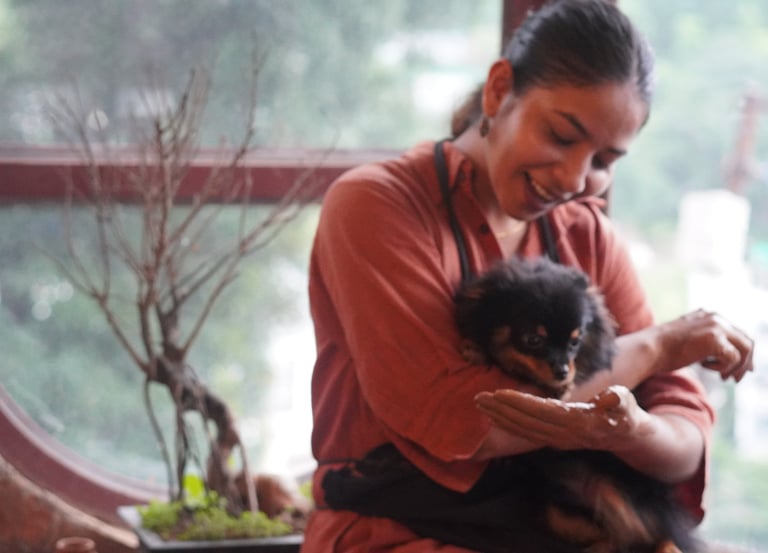
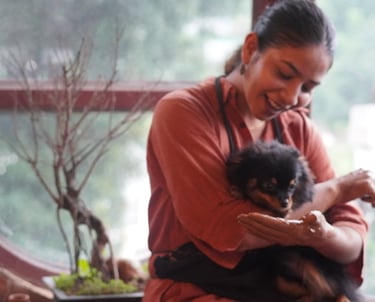
Hi, I’m Shivani a yoga teacher, Ayurvedic therapist, Ayurvedic cooking instructor, and now, a devoted pottery artist. Over the past few months, I’ve discovered a deep connection with clay and sculpting. For me, pottery isn’t just an art form it’s a soulful conversation between my hands and the earth. Somehow, the clay responds to my touch as if it knows the shapes it wants to become. Guiding people through this creative process is something I cherish.
I love watching students discover the calm, joy, and meditative flow that pottery naturally brings. Each session is a journey of shaping not just clay, but also patience, mindfulness, and self-expression.
Kumar Krishna
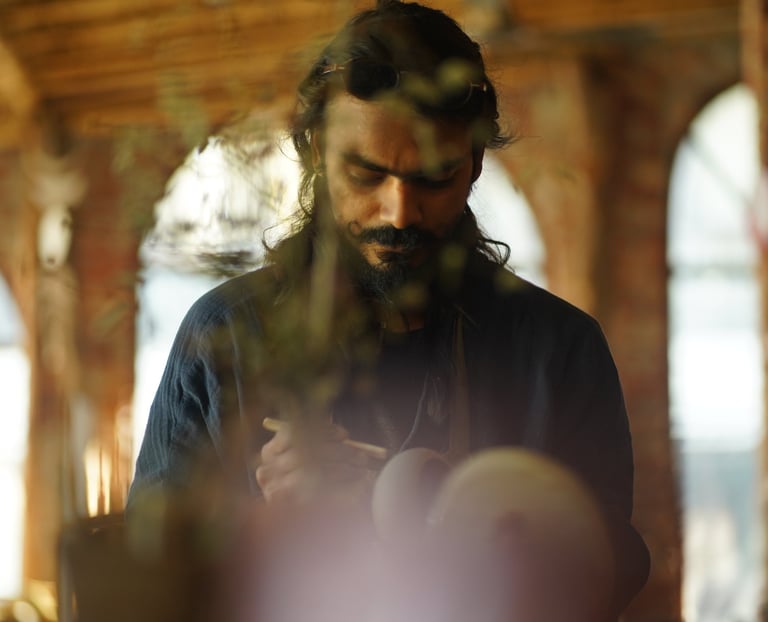
Krishna Kumar’s journey with clay began in the simplest yet most profound way—through the innocent act of playing with mud as a child. The tactile joy of molding toys from the earth planted a deep-rooted love for the texture of clay within him. This early fascination blossomed into a full-fledged artistic pursuit during his bachelor's studies when he discovered the rich possibilities of ceramics. The technical challenges of the medium, from mastering the kiln to manipulating the clay’s surface, ignited his creative spirit.
Krishna embraced this complexity, diving into processes such as Raku, Obara, Crackle Raku, and smoke firing, each technique offering its own unpredictable beauty.